Theo Hunt continued his outstanding run of successes by being declared provisional winner of this year’s VSCC’s Pomeroy Trophy.
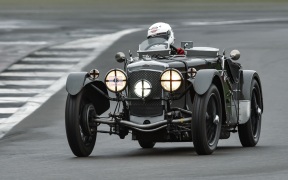
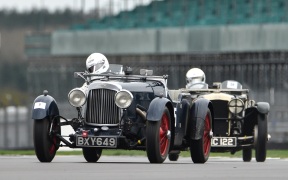
Driving his Frazer Nash TT Replica (Replicas being cars built from 1932 that were copies of those entered for the 1931 Tourist Trophy), Hunt accumulated a total of 425.3 points, adding victory at Silverstone to his win at Angoulême last September. Simon Blakeney-Edwards (Frazer Nash Super Sports) finished second, winning the Densham Trophy, whilst Hunt’s father Martin finished third in the same Frazer Nash Targa Florio that guided him to victory in 2015.
In Class 2 (non-road legal cars), Alex Ames (BMW CSL) was awarded the Gordon Spice Cup. Ames beat Hunt’s final tally by a narrow margin but was ineligible for the main competition which is restricted to pre-war and road legal cars only.
_
Following scrutineering, which included the mandatory suitcase test (each competitor is obliged to be able to carry two standard suitcases in either the rear passenger compartment, the boot or on a luggage rack) the day’s events started with a series of controlled tests; the more than one hundred entries being split into three age and performance-based groups. First was the slalom, known affectionally as the ‘wiggle-woggle’. Here, it was soon apparent that for some, the ability to guide an LMP1 car at blistering pace might well be easier than the challenge of remembering which side of a traffic cone to steer by. Then it was on to the braking and speed tests before the highlights of the day, the 40-minute, high speed trials around the Grand Prix circuit.
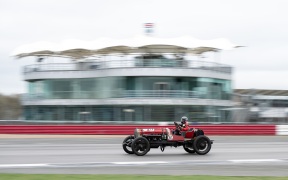
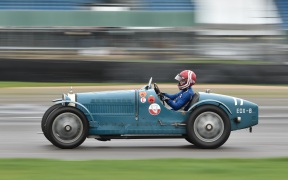
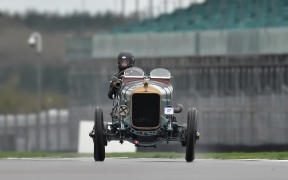
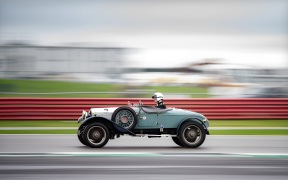
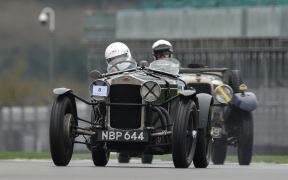
Changeable conditions are often a determining factor with ‘the Pom’, and as the pre-war machines were unleashed, the still-damp track proved just as much a hamper to pace as the tolerance of strained pistons and chains. Nevertheless, there was much to be admired: Tony Lees’ 1913, near-12-litre Vauxhall Viper gave its all in pursuit of a squadron of Frazer Nash Super Sports’, whilst the sight of Luke Roberts sitting aloft his 1906 Bianchi, perched on a leather-buttoned seat, drew gasps. Lukas Halusa’s 1927 Bugatti Type 35C sped to the fastest lap in group (just as it had in so many grand prixs nearly a century before), but it was Hunt, who had been supreme in the tests, who then exceeded his required number of laps by three to position himself as the driver to beat.
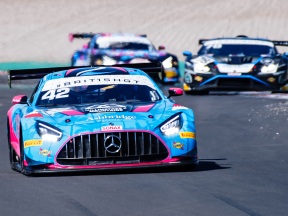
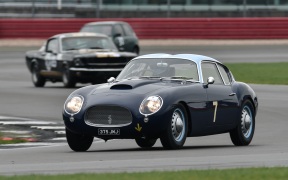
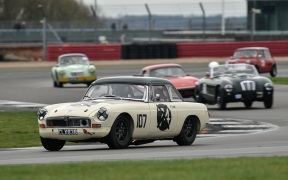
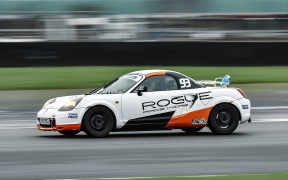
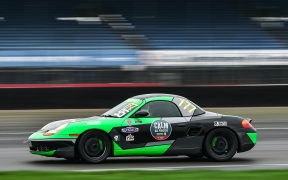
The second group was more about style than substance, though Geraint Owen’s TR4 was in blistering form. Not quite so racy was Nicholas Topliss’ newly finished Bristol Zagato, nevertheless, its beauty and brilliance shone and was thoroughly deserving of its praise. But it was the group 3 encounters that the packed BRDC grandstand had most eagerly awaited. Leading the procession was Alex Ames in the Martin Stretton-prepared BMW CSL. All hopes of a mighty duel with Patrick Blakeney-Edwards in his Jägermeistered-car soon faded along with the orange BMW’s unwillingness to participate. This led Ames to push on out in front and alone, whilst further back, Martin Short (Yaris GR) and David Smitheram (Corvette C6) scythed through the pack. At first, Ames’ choice of heavily treaded tyres worked well until unexpectedly, the tarmac dried and Smitheram found the pace to leave Short behind and close-in, only for the chequered flag to fall as he eyed his move.
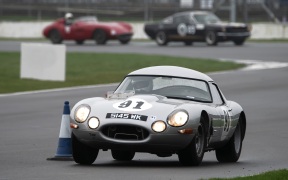
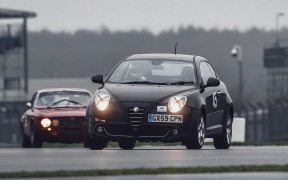
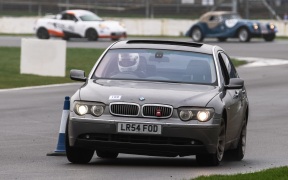
Here are twenty of our favourite images from this magnificent event:
* All images by Steve Hindle & Howard Fielding






Written By

Try These Next
Stories we think you'll enjoy